
How to Draw an Old Man Face Step by Step (Pencil Portrait)
- Beginner
- 12 min
- 12 steps
- People & Portraits
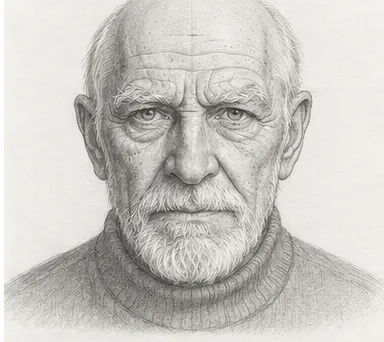
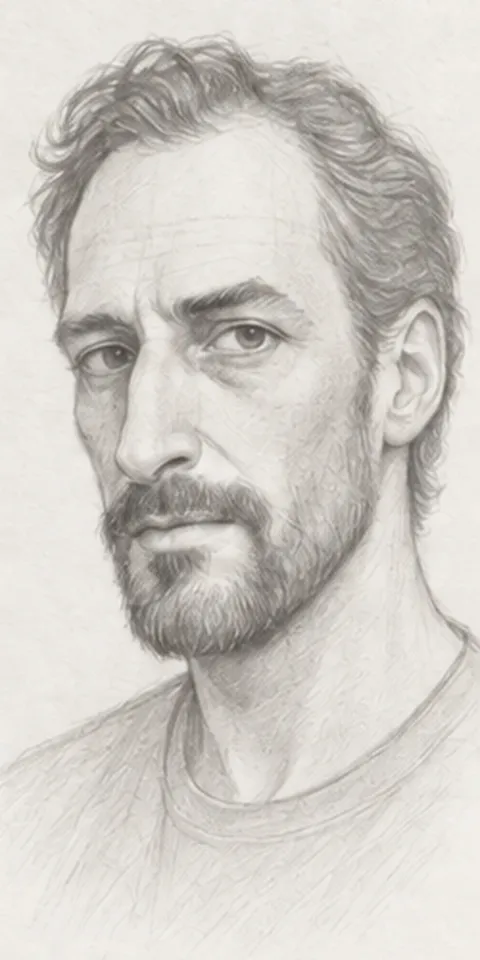
An older face shows a lifetime of structure on its surface: folds, loosened skin, bushy brows, and a beard that is lighter than the shadows around it. This lesson draws a bald man with a white beard, facing you straight on and wearing a ribbed turtleneck, in 12 small steps that take about 12 minutes. It’s a good fit if you want to learn how to draw an old man face without it turning into a tangle of scribbled lines. You’ll learn which wrinkles to draw, which to only suggest, and how to show white hair with a graphite pencil.
What you'll need
- HB pencil
- 2B and 4B pencils
- kneaded eraser
- drawing paper
How to draw an old man's face step by step
Step 1
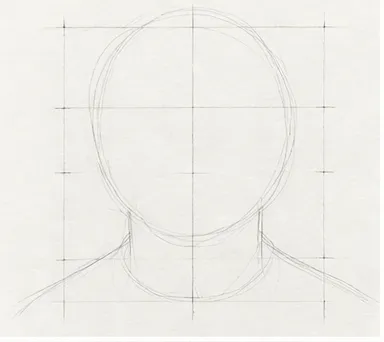
Step 2
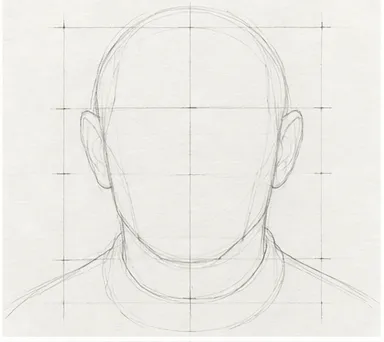
Step 3
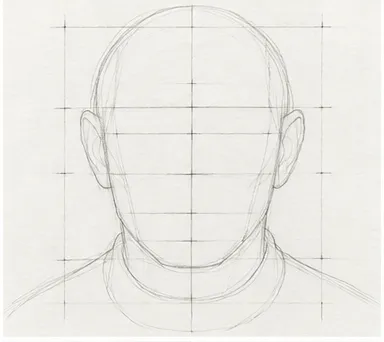
Step 4
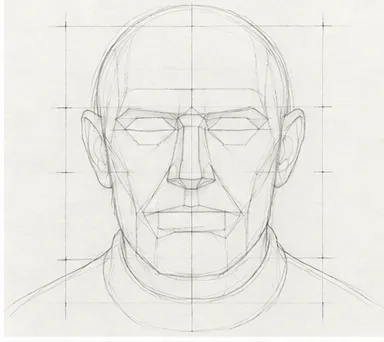
Step 5
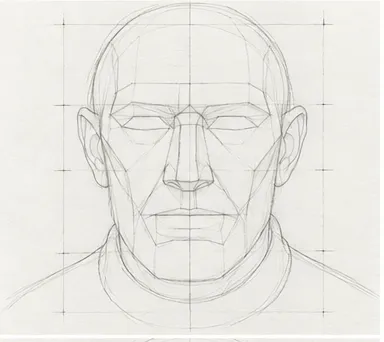
Step 6
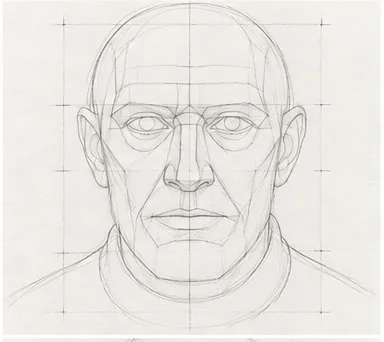
Step 7
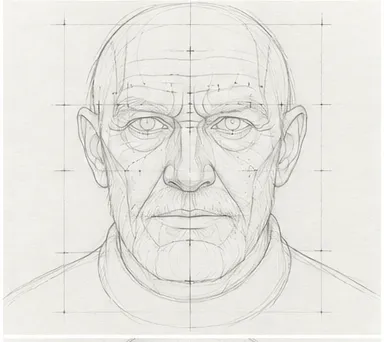
Step 8
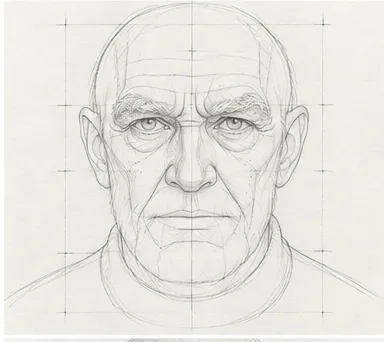
Step 9
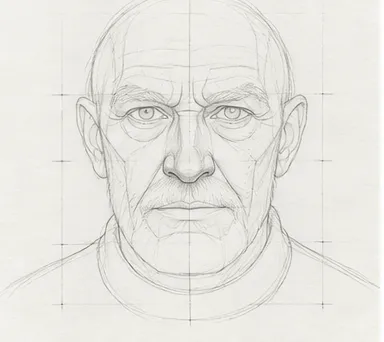
Step 10
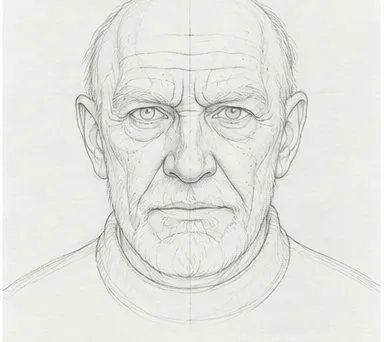
Step 11
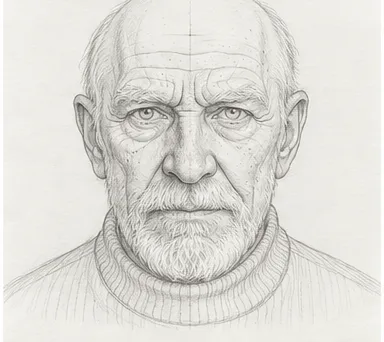
Step 12
Watch it come together

How age changes the face
Age changes the face in predictable ways. Skin loses fat and elasticity, so the bone structure shows more: the temples hollow, the cheekbones stand out, and a shallow dip forms below them. Meanwhile, the nose and ears keep growing slowly throughout life. On an elderly man they look longer and larger than on a young face, with heavy earlobes.
Wrinkles follow the form underneath them. Forehead lines curve across the dome of the skull instead of running straight. Crow’s feet fan out from the outer corners of the eyes. The deepest folds run from the wings of the nose down past the mouth and into the moustache. Each of these is a fold, not a cut: it has a shadowed side and a lit upper edge. That’s why a single dark line looks flat.
The eyes look smaller and more deeply set because the upper lids droop and the brow overhangs them. Thick, unruly eyebrows exaggerate this and frame the gaze.
Because this portrait faces you straight on, small differences between the left and right sides matter. Real faces are never perfectly symmetrical, but the eyes, the corners of the mouth and the ears should still sit at matching heights, or the head will look tilted.
You draw the white beard and the hair at the sides of the head mostly through what you leave out. Shade the skin and the shadows beneath and between the hairs, and let the paper act as the white hair. Keep the knitted turtleneck lighter and simpler than the face so the face stays the focus.
Common mistakes
Drawing every wrinkle as a dark line
The face ends up looking cracked rather than aged. Choose the major folds — forehead, crow's feet, nose to mouth — shade them softly, and suggest the rest with light tone.
Keeping the cheeks full and round
A young face shape under old details never looks right. Shade the hollows at the temples and just below the cheekbones.
Drawing the white beard with dark strokes
The beard turns grey and heavy. Shade the gaps and the shadow under the beard instead, then lift a few bright strands with a kneaded eraser.
Over-rendering the sweater
A fully drawn knit pattern competes with the face. Show the rib pattern clearly near the collar and let it fade toward the edges of the paper.
Frequently Asked Questions
How do you draw wrinkles without making the face look dirty?
Treat each wrinkle as a small fold. Shade the side that faces away from the light, keep the lit edge clean, and use fewer lines with varied pressure instead of many dark ones.
How do you draw white hair with a pencil?
Draw the shadows around the hair, not the hair itself. Darken the skin and gaps behind the beard and eyebrows, leave the paper white for the hair, and lift fine highlights with an eraser.
Is learning how to draw an old man face harder than a young one?
It's often easier. The bone structure and folds give you clear landmarks to measure from, and small inaccuracies read as character instead of mistakes.
Practice this lesson in Sketch Steps — with AR tracing on real paper.
More drawing lessons
Related reading
- Face Sketch Step by Step: How to Draw Faces for BeginnersA step-by-step face sketch guide for beginners — proportion guidelines and an order of operations that actually works.
- Pencil Drawing for Beginners: A Step-by-Step GuideA step-by-step pencil drawing guide for beginners — which pencil to start with, how much pressure to use, and the order that actually works.