
How to Draw a Man with a Beard Step by Step (Graphite Portrait)
- Beginner
- 12 min
- 12 steps
- People & Portraits
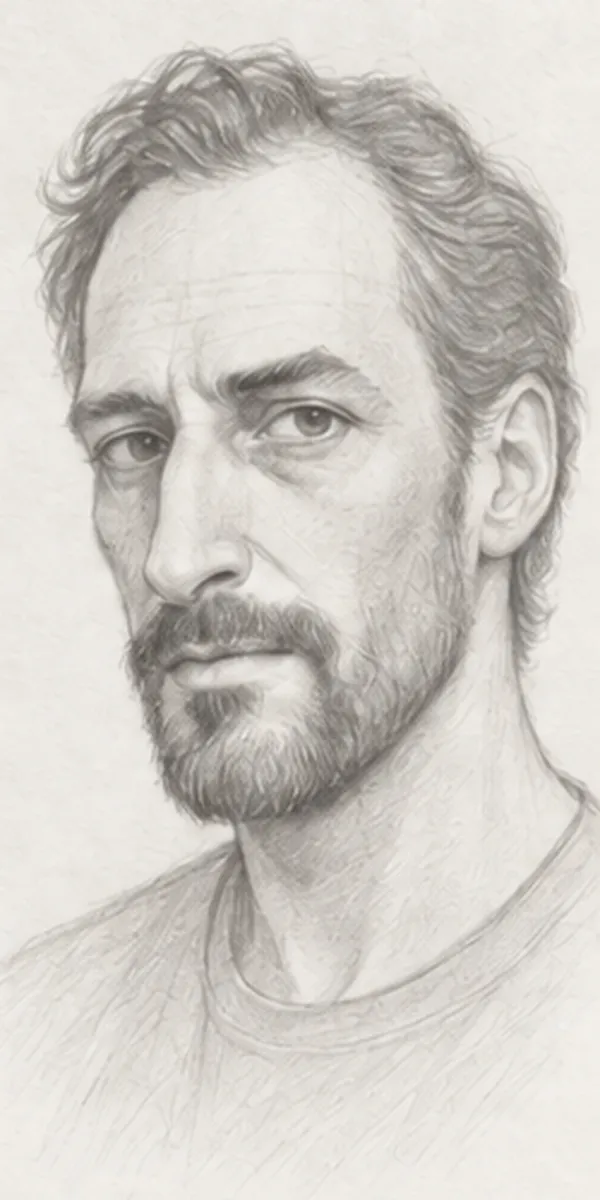
A beard changes how a face is built on paper: it hides the jaw and lips, adds its own shape, and needs a different kind of shading from the skin around it. This lesson draws a man in his forties with a short, full beard and moustache, tousled hair and a crew-neck T-shirt, in a three-quarter view, in 12 small steps that take about 12 minutes. It’s a practical way to learn how to draw a man with a beard that looks thick and natural instead of scribbled on.
What you'll need
- HB pencil
- 2B and 4B pencils
- kneaded eraser
- blending stump (optional)
- drawing paper
How to draw a man with a beard step by step
Step 1
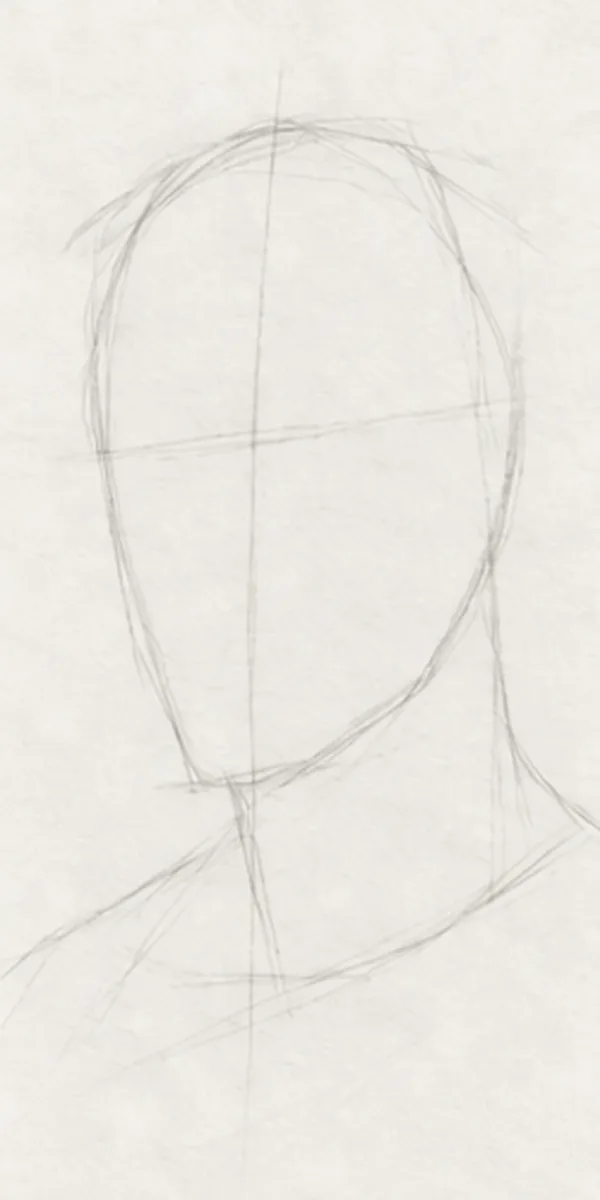
Step 2
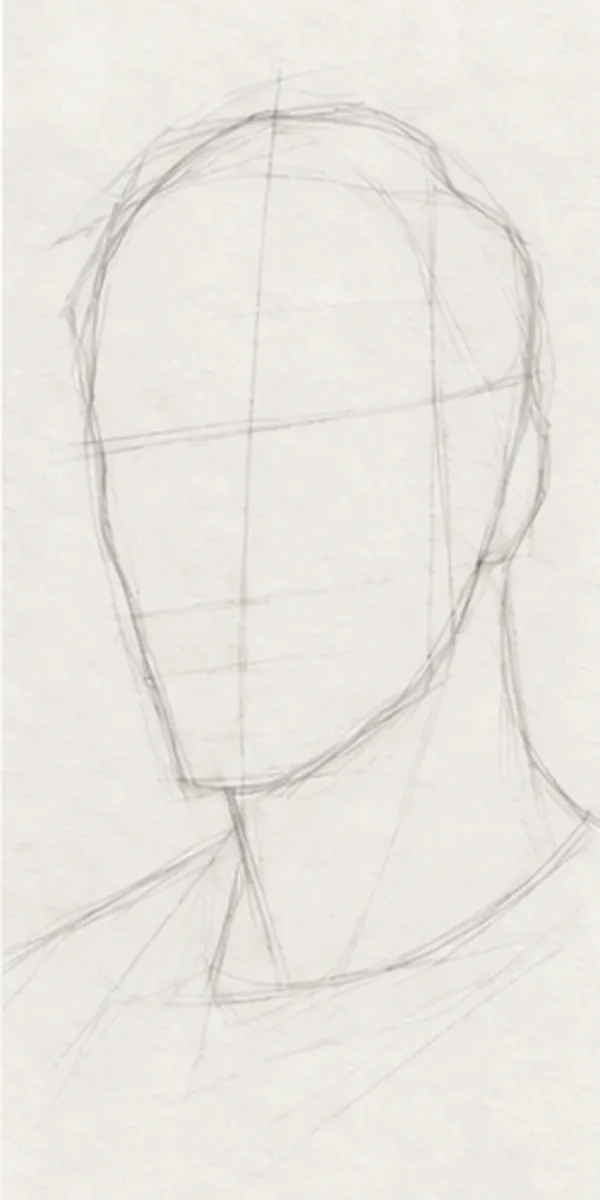
Step 3
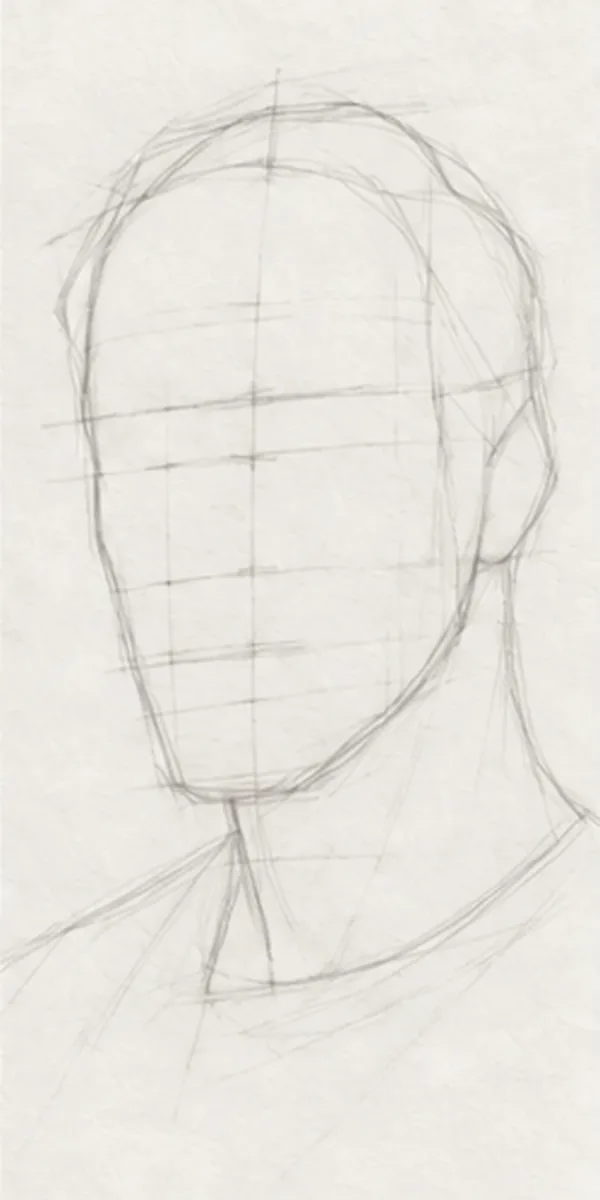
Step 4
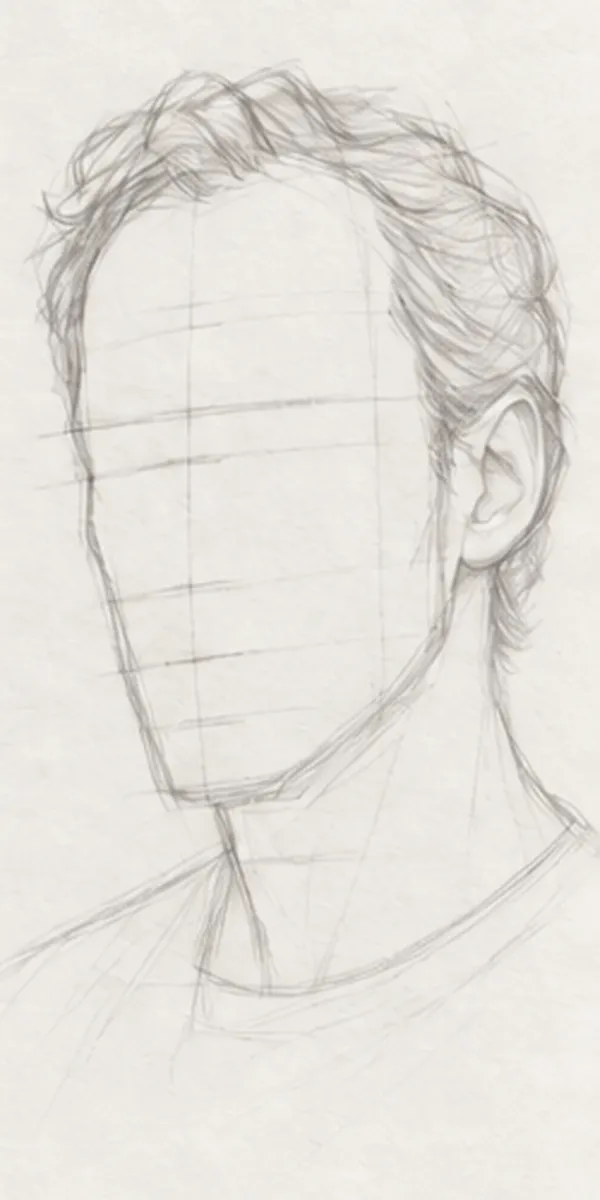
Step 5
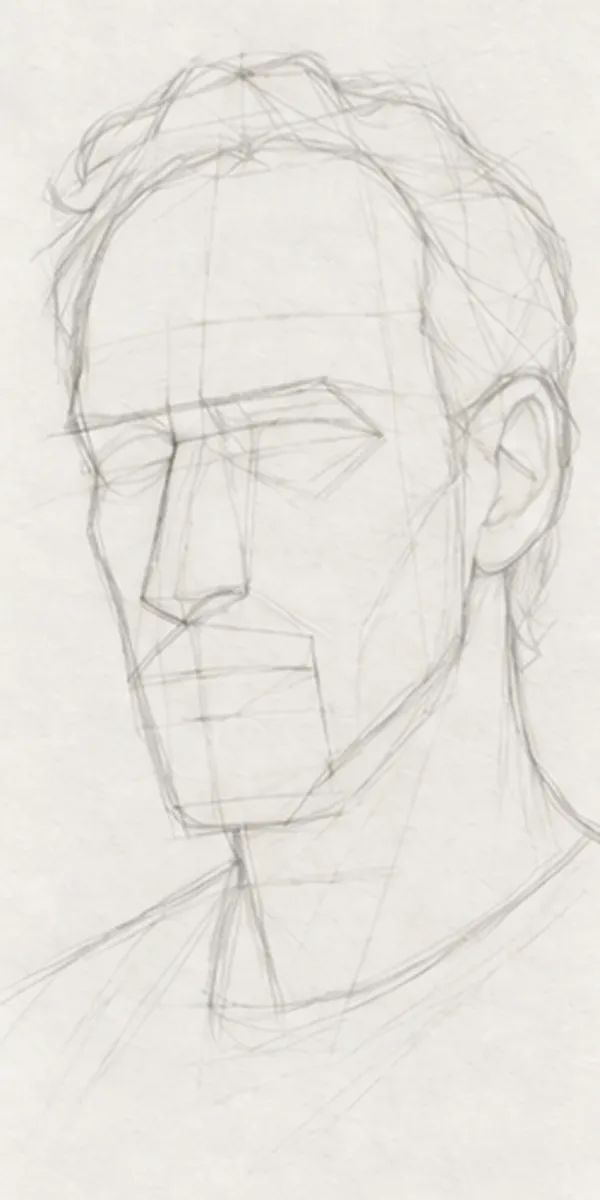
Step 6
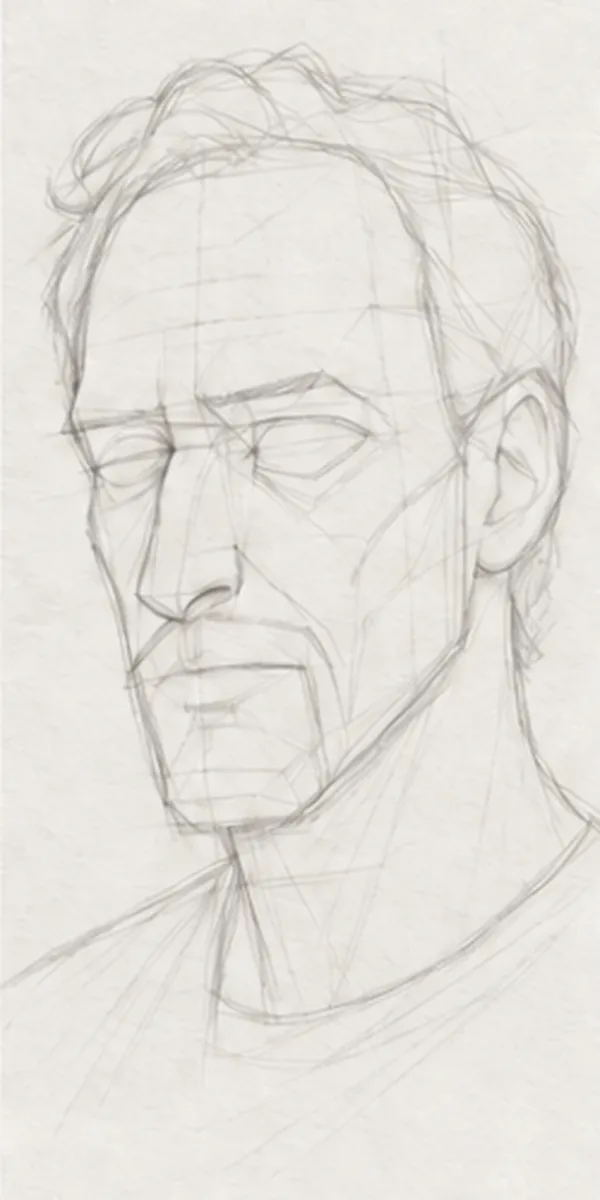
Step 7
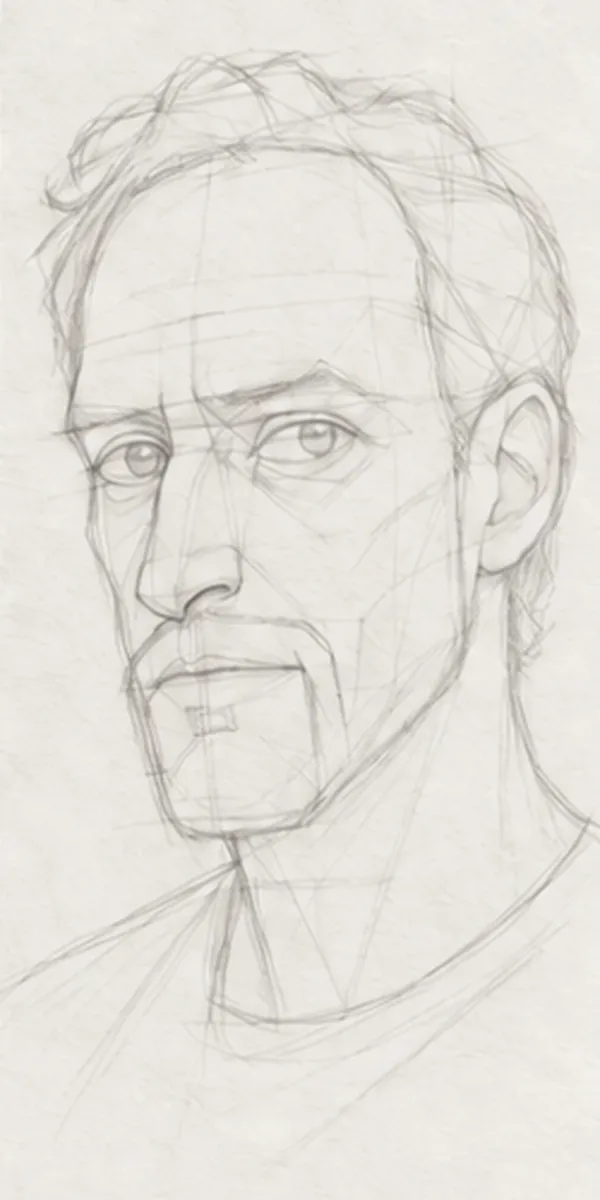
Step 8
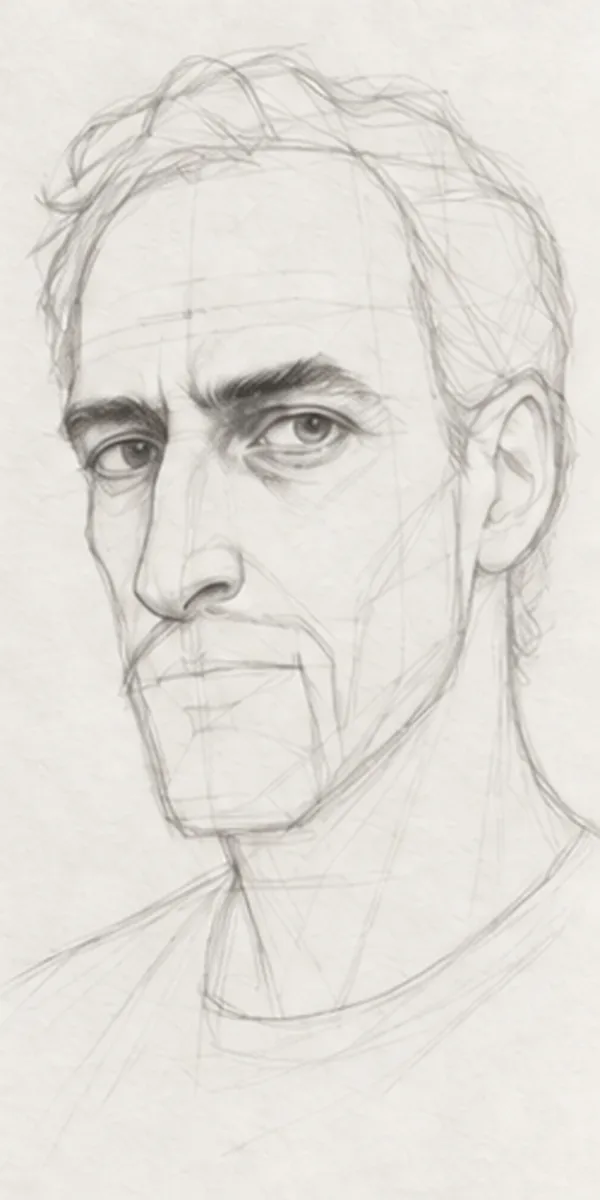
Step 9
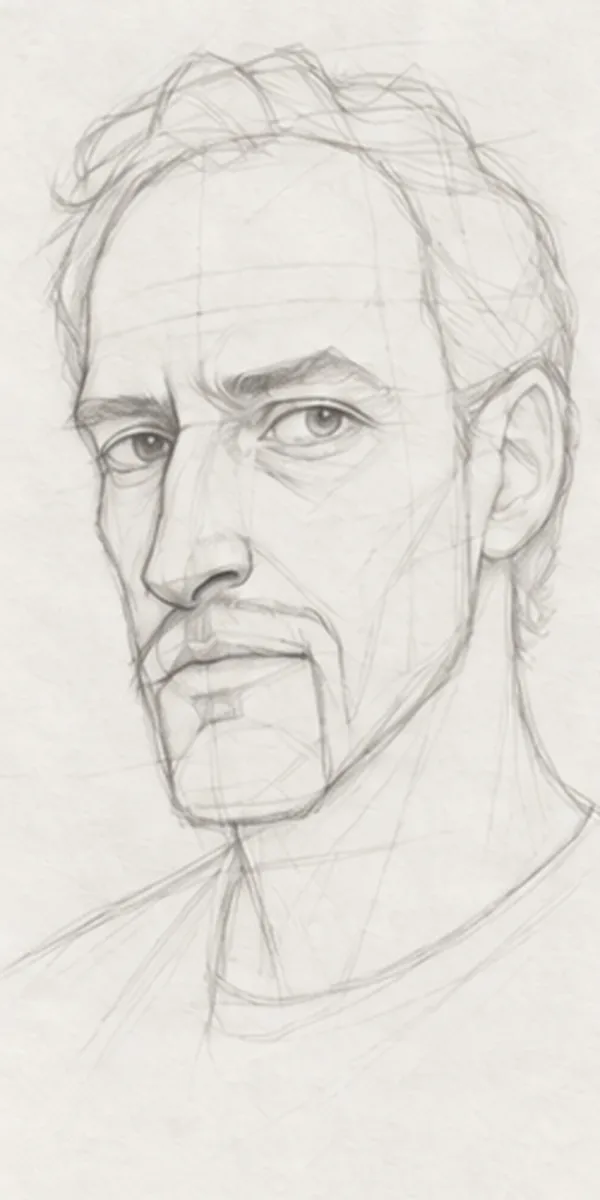
Step 10
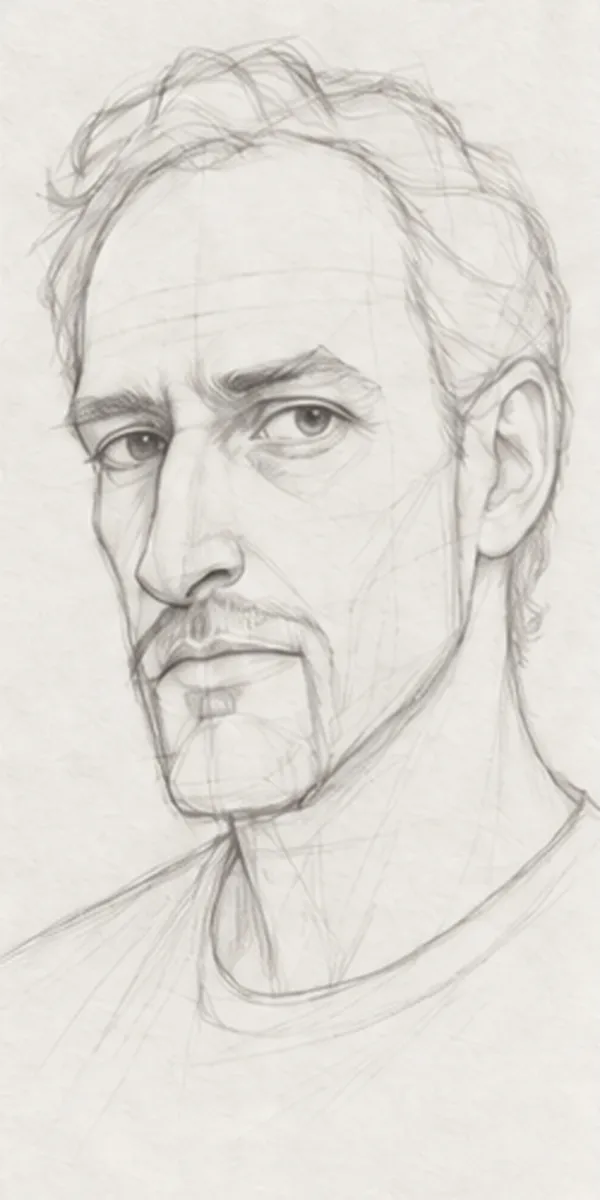
Step 11
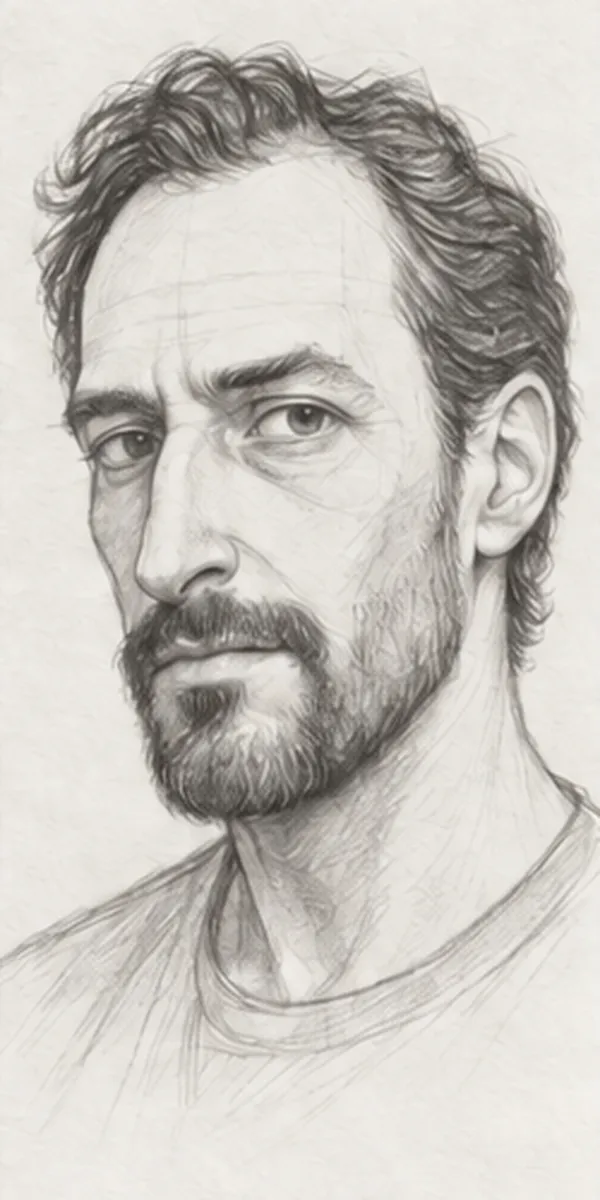
Step 12
Watch it come together

Understanding a bearded face
A beard is a form, not a texture. It wraps around the jaw and chin and has its own thickness, so it pushes the jaw’s silhouette out slightly and softens its corner. Shade it like a solid shape first: darker under the jaw and on the side of the face turned away from you, lighter on the plane facing the light. Only then add strokes, and make them follow the way the hair grows — downward on the cheeks, down and slightly outward on the chin, and down and away from the centre of the upper lip for the moustache.
Edges tell the viewer where the beard begins. On the jaw silhouette the edge is clear, but on the cheek it fades gradually into stubble and then skin. On this portrait the beard grows high on the cheeks, so that soft transition sits just below the cheekbone.
The mouth is mostly hidden. The moustache covers the upper lip, and the lower lip shows as a small, lighter shape with a dark gap under it where the beard starts again. That contrast is enough to read as a mouth — no outline needed.
The rest of the face shows middle age: a few horizontal forehead creases, a slightly heavier lower eyelid, and deep-set eyes under a strong brow that casts a soft shadow. The three-quarter turn means the far eye is narrower and the nose overlaps the far cheek.
Below the beard, the neck shows its structure — the Adam’s apple and the long muscle from behind the ear to the collarbone. A shadow where the beard ends separates the head from the neck.
Common mistakes
Drawing every beard hair
Hundreds of separate lines look like wire and flatten the face. Shade the beard as one mass first, then add a few strokes that follow the direction it grows.
A hard outline where the beard meets the cheek
A crisp border makes the beard look stuck on. Fade it into the cheek with short, light strokes that get sparser as they move up the face.
A flat beard with no volume
A beard has thickness and wraps the jaw. Make it darker under the jaw and on the side turned away, keep the plane facing the light lighter, and let it extend the jaw's silhouette slightly.
Outlining the lips inside the beard
A drawn lip outline looks pasted on. Show the lower lip as a lighter shape and darken the gap below it where the beard meets the mouth.
Frequently Asked Questions
How do you draw a beard with a pencil?
Block in the beard's overall shape and shade it as a form, darkest under the jaw. Then add strokes in the growth direction — downward on the cheeks, down and outward on the chin, and down and away from the centre for the moustache.
How do you draw stubble instead of a full beard?
Lay a light, even tone over the beard area, soften it with a stump or tissue, then add tiny dots and very short marks. Avoid long strokes, which read as a grown-out beard.
Is learning how to draw a man with a beard harder than a clean-shaven face?
Often it's easier. The beard hides the exact shape of the lower jaw and lips, which are the hardest parts to get right, so you can focus on the eyes, nose and overall tone.
Practice this lesson in Sketch Steps — with AR tracing on real paper.
More drawing lessons

Related reading
- Face Sketch Step by Step: How to Draw Faces for BeginnersA step-by-step face sketch guide for beginners — proportion guidelines and an order of operations that actually works.
- The Step-by-Step Method for Sketching: Why It WorksWhy breaking a drawing into ordered steps helps adult beginners learn faster than copying reference images or watching tutorials.