
How to Draw a Girl with Long Hair Step by Step (Easy Pencil Portrait)
- Beginner
- 12 min
- 12 steps
- People & Portraits
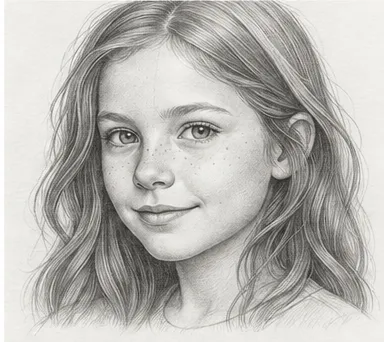
Long hair is where many beginner portraits go wrong: it comes out flat, stringy or helmet-shaped. This lesson draws a smiling girl with freckles, a centre parting and wavy hair falling past her shoulders, with her head turned slightly, in 12 small steps that take about 12 minutes. It’s a focused way to learn how to draw a girl with long hair. You’ll see how hair sits on the head, separates into clumps and frames the face, while the young face itself stays soft and light.
What you'll need
- HB pencil
- 2B and 4B pencils
- kneaded eraser
- drawing paper
How to draw a girl with long hair step by step
Step 1
Step 2
Step 3
Step 4
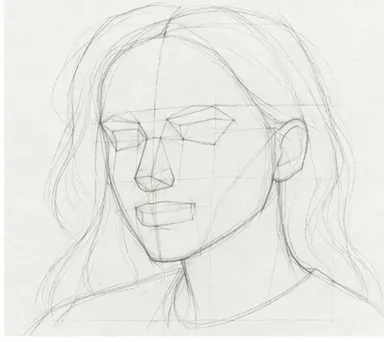
Step 5
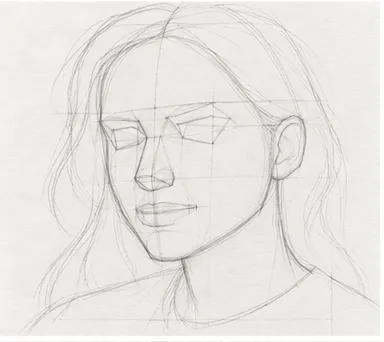
Step 6
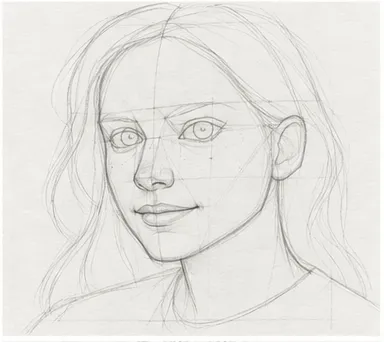
Step 7
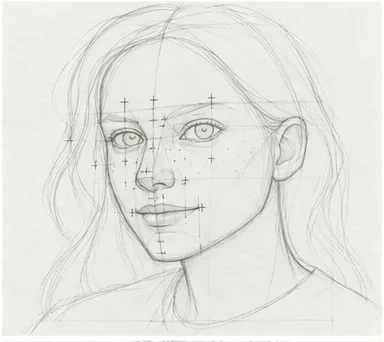
Step 8
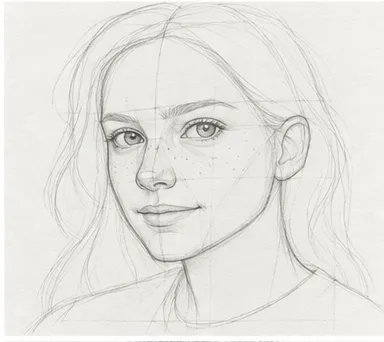
Step 9
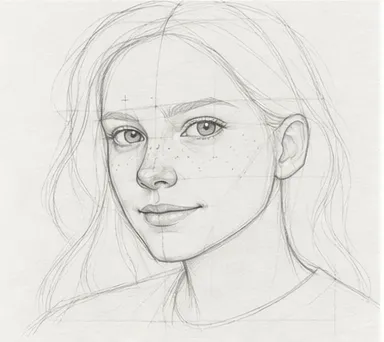
Step 10
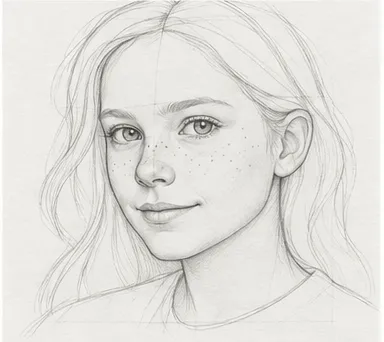
Step 11
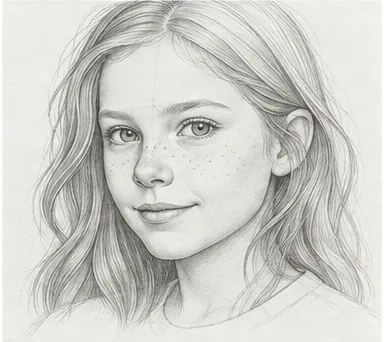
Step 12
Watch it come together

How long hair works
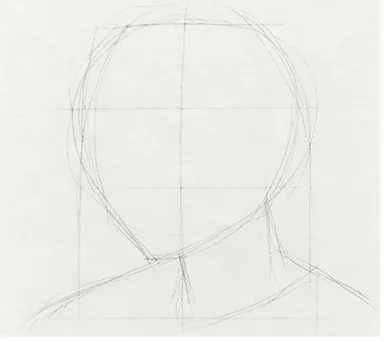
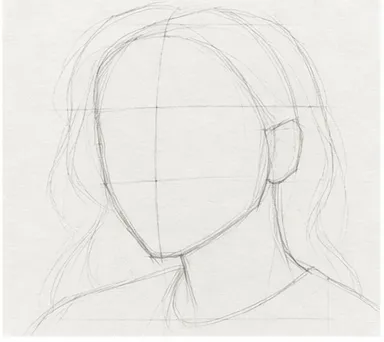
Start with the head under the hair. Hair sits on top of the skull with some volume, so its outline should sit a little above and outside the head instead of hugging it like a cap. The centre parting follows the curve of the skull, and the hair falls from it to each side.
Long hair moves in clumps, like ribbons, not as single strands. Each wave is an S-curve, and the clumps overlap, one in front of another, with darker gaps between them. Where the hair turns toward the light, on the crown and on the outer edge of each wave, leave a light band. Where it tucks under, behind the neck and between locks, press darker. That contrast is what makes hair look glossy and three-dimensional.
The hair also frames the face. On the near side it falls past the cheek and partly covers the jaw. On the far side, the ear peeks through where the hair is tucked back. Darker hair next to the cheek also makes the skin look brighter.
Below the shoulders, the hair has to rest on something. Even when you can barely see them, sketch the shoulders and neck lightly first so the long strands drape over a believable body instead of floating in space.
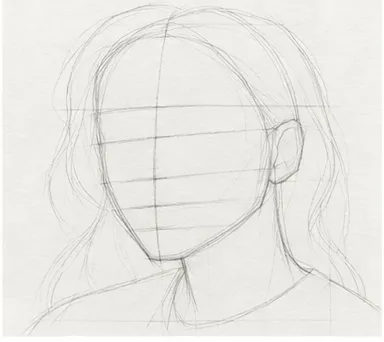
The face follows a child’s proportions: eyes slightly below the middle of the head, a small rounded nose and chin, and full cheeks that lift into the smile. Freckles cluster across the bridge of the nose and the upper cheeks. Keep the shading on the skin soft, and let the hair hold your darkest values.
Common mistakes
Hair drawn tight to the skull
The head looks shrunken and the hair looks painted on. Draw the outer edge of the hair a little above the crown and outside the temples to give it volume.
Hundreds of separate, evenly spaced lines
It reads as straw instead of soft waves. Block in the large clumps first, then add individual strands only on top of the clumps.
One flat grey tone across all the hair
Without contrast, the waves disappear. Leave light bands where each wave turns toward the light, and darken underneath and between the clumps.
Blunt strand ends
Hair that stops abruptly looks cut out. Taper each stroke by lifting the pencil as you finish, and let a few loose hairs break the outline at the ends.
Frequently Asked Questions
How do you draw long hair that doesn't look flat?
Think in overlapping clumps, not strands, and make the contrast strong. Use light where each wave turns toward you and the darkest tone where the hair tucks underneath.
Should I draw the face or the hair first?
Sketch both lightly so they fit together, then finish the face before you add the darkest hair tones. That way you can judge the values and avoid smudging the skin.
What's the hardest part of learning how to draw a girl with long hair?
Controlling the values. Most beginners make all the hair the same grey. Saving a few clear highlights and committing to dark gaps between the clumps makes the biggest difference.
Practice this lesson in Sketch Steps — with AR tracing on real paper.
More drawing lessons
Related reading
- Face Sketch Step by Step: How to Draw Faces for BeginnersA step-by-step face sketch guide for beginners — proportion guidelines and an order of operations that actually works.
- Pencil Drawing for Beginners: A Step-by-Step GuideA step-by-step pencil drawing guide for beginners — which pencil to start with, how much pressure to use, and the order that actually works.